
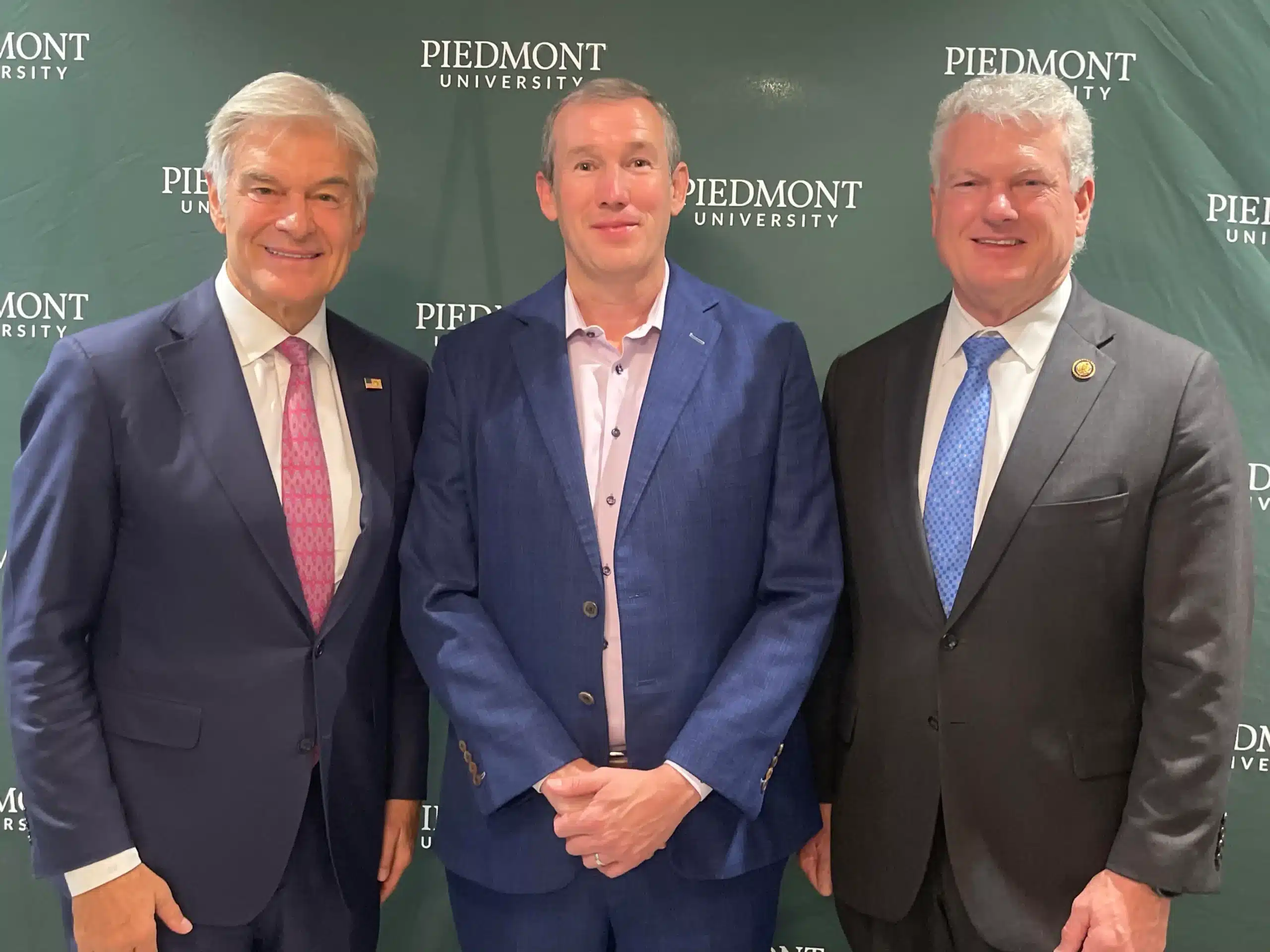
From left: CMS Administrator Dr. Mehmet Oz, Athens Orthopedic Clinic CEO Michael Boblitz and U.S. Representative Mike Collins.
Discussion focused on protecting physician reimbursement and expanding incentives for care delivered in lower-cost settings.
ATHENS, Ga. – September 14, 2026
Athens Orthopedic Clinic CEO Michael Boblitz met with Centers for Medicare & Medicaid Services Administrator Dr. Mehmet Oz on Sunday, September 14, to share his concerns about proposed Medicare physician payment reductions in 2027.
During the meeting, Boblitz thanked Dr. Oz for serving in one of the most challenging positions in healthcare and expressed appreciation for the first net increase in Medicare payments to orthopedic surgeons in many years under the 2026 physician fee schedule.
Although the calculations differed from previous years, Boblitz said the 2026 fee schedule increased Athens Orthopedic Clinic’s net Medicare payments by approximately $300,000. The changes emphasized performing more services in physician offices, including MRI, physical therapy, pain management injections and consultations.
The 2026 increase included a temporary 2.5% adjustment enacted through the One Big Beautiful Bill Act. Read Boblitz’s analysis of the 2026 Medicare physician fee schedule in “Winning Through Independence: The Only Response to Medicare Uncertainty.”
Proposed 2027 Medicare Rate Changes
Medicare Part A
- Hospital inpatient reimbursement would increase by 1.7%.
Medicare Part B
- Ambulatory surgery center reimbursement would increase by 2.4%.
- Hospital outpatient department reimbursement would increase by 2.4%.
- Physician reimbursement would decrease by 1.2%, including:
- Reimbursement for certain same-day services would decrease by 50%.
- Joint replacement surgery reimbursement would decrease by approximately 20%.
Boblitz expressed concern about funding increases for hospital outpatient services while reducing physician reimbursement under Medicare Part B. He said continued reductions could worsen physician shortages and make it increasingly difficult for independent medical practices to remain sustainable.
Boblitz also explained that continued reimbursement reductions can push physicians toward hospital employment or professional services agreements. He said shifting care from physician offices to hospital-based settings can increase Medicare costs by up to 20% and costs to private insurers and businesses by up to 50% or more.
During the discussion, Dr. Oz acknowledged concerns about continued physician payment reductions. He noted that while compensation in many professions has kept pace with or exceeded inflation, physician compensation has fallen short at approximately half the rate of annual inflation for several years.
Dr. Oz also explained that Medicare Part B operates within the federal government’s broader general fund budget. U.S. Representative Mike Collins attended the meeting, and Dr. Oz noted that Representative Collins and other members of Congress would play an important role in efforts to prevent further physician payment reductions.
Potential Approaches to Prevent Physician Payment Cuts
1. Extend the temporary 2.5% adjustment.
Extend the 2.5% temporary adjustment implemented in 2026 through 2027 to allow additional time to develop a viable long-term solution.
2. Expand incentives for care delivered in lower-cost settings.
Extend the incentives introduced for physician-office services in 2026 to ambulatory surgery centers in 2027. For example, physician
reimbursement could increase by 3% or more for qualifying orthopedic procedures performed in ambulatory surgery centers while remaining flat for the same procedures performed in hospitals. This approach would reward care delivered in lower-cost settings and could reduce overall Medicare Part B spending.
3. Reallocate Medicare Part B funding.
Redirect a portion of Medicare Part B funding from higher-cost hospital outpatient services to support appropriate increases in physician reimbursement.
Establish a Sustainable Long-Term Funding Model
Medicare Part A has historically been supported by payroll taxes, while Medicare Part B is funded primarily through premiums and federal general revenues. As the U.S. population ages, Medicare expenditures will continue to increase, adding urgency to the need for a sustainable funding model.
Boblitz called on the House Ways and Means Committee to address long-term Medicare Part B funding. A long-term solution could require Congress to increase the payroll tax to fund consistent physician payment increases or establish a new taxation or funding policy to sustain physician reimbursement under Medicare for the long term.
Until a long-term funding solution is established, physicians should receive appropriate annual Medicare payment updates through temporary adjustments, the reallocation of Part B funding or incentives that encourage care in physician offices and ambulatory surgery centers.
About Athens Orthopedic Clinic
Founded in 1966, Athens Orthopedic Clinic is Northeast Georgia’s largest provider of orthopedics and sports medicine, serving more than 230,000 patients annually. With a team of 79 physicians, advanced practice providers, and outpatient therapists, AOC offers comprehensive orthopedic services including joint and spine care, ambulatory surgery, imaging, physical therapy, urgent care, and occupational medicine. AOC physicians serve as teaching faculty with the Medical College of Georgia and the University of Georgia School of Medicine. Learn more at www.athensorthopedicclinic.com.
Media Contacts
Amy Wages
Director of Marketing, Training and Development
Athens Orthopedic Clinic
awages@athensorthopedicclinic.com | 706-433-3126